Hygiene Drive:
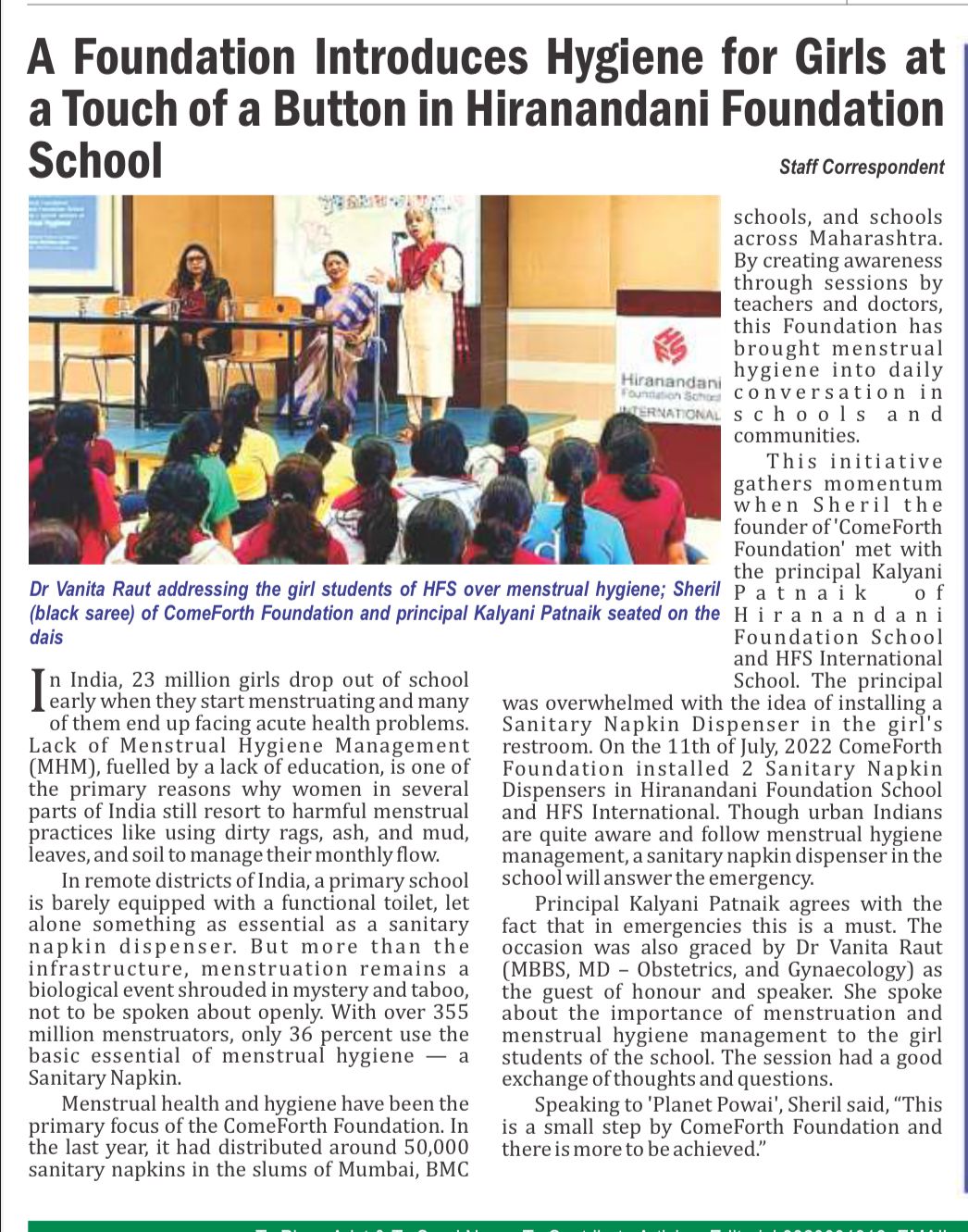
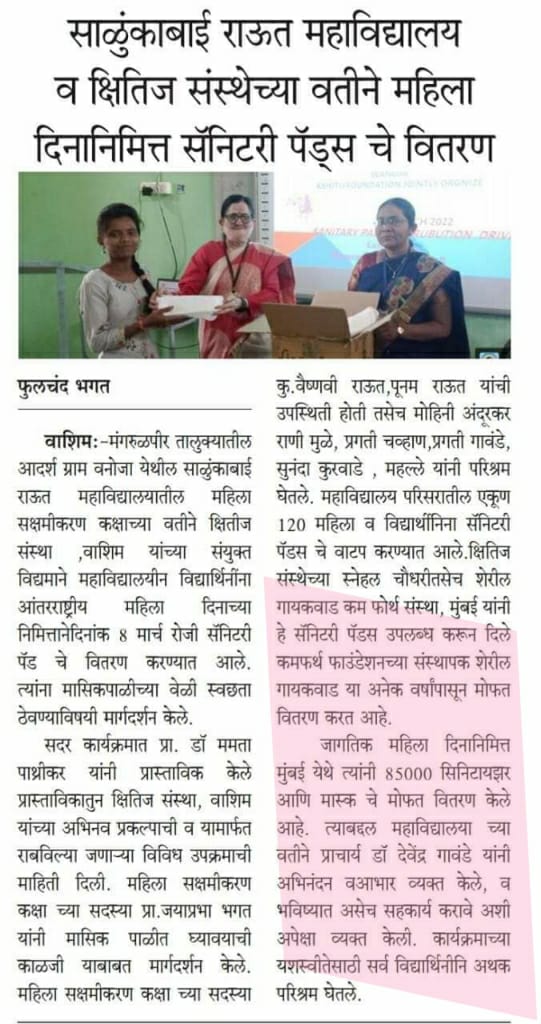
Sanitary Napkin Distribution50000
Sanitary Napkins
Distributed

A step to support, uplift and enrich lives.
Our foremost objective is to extend hand-in-hand support to the underprivileged sections of society and help improve lives. The focus is to provide life essentials, livelihood, and a platform for the needy to live an honorable and self-dependent life.
There are many who suffer because they don’t know whom to seek help from. There are many who have talent but no direction. There are many who have nobody and there are many who want to support the needy. Therefore, we’ll create awareness to find support for the needy and fill the gap.
Our belief - Even the smallest steps move you forward.
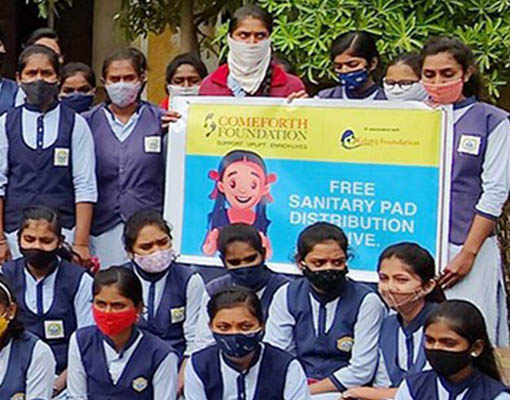
Sanitary Napkins
Distributed
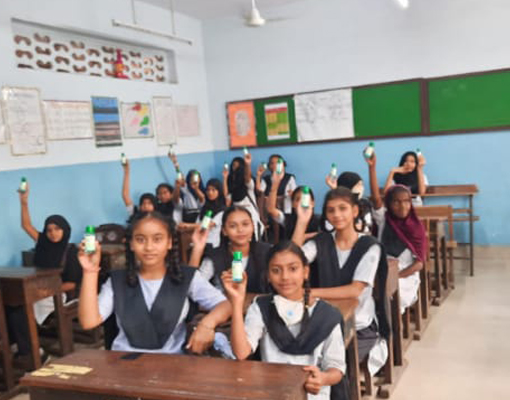
Hand Sanitizers
Distributed
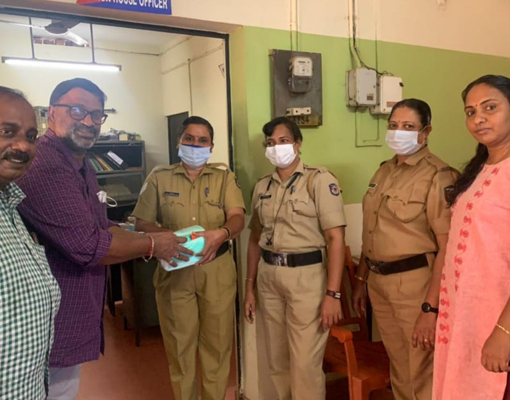
Face Masks
Distributed

India, which now has the world’s third-largest economy in terms of purchasing power parity, has been an urban-cantered, industrializing nation since its independence in 1947. Over the last 25 years, India has been noted for its significant economic growth which looks to continue for the 2017 -2018 fiscal year with an expected growth rate of 7.2 percent. While India has maintained much economic success, many failures and weaknesses still debilitate the nation’s full potential. For example, the poverty rate in India has been less severe in recent years, but there is still much room for improvement. In 2016, 270 million Indians were surviving on $1.90 or less a day, the World Bank’s definition of extreme poverty. Of the people living in these conditions, 80 percent lived in rural India, where the main source of income for the population is through casual labour. While the economy has appeared to have boomed over the last 25 years, most growth has been in urban areas where large multinational corporations, such as IBM and Microsoft, base their software development headquarters. With this divide between urban and rural life, the economic growth does not seem to remove the issues of extreme poverty in the way a neoliberal economist would suggest. A study in 2002 found that these conditions in India are partially due to educational poverty, which is defined as the deprivation of basic education and literacy. ... Only 6% of the income from poor households is invested into education and health, while the majority is spent on other necessities such as food and fuel. However, Tsujita, a researcher of the Institute of Developing Economies, believes that “there may be a chance of escaping poverty through education.” The government in India seems to agree with this statement as they promoted the Sarva Shiksha Abhiyan (SSA) project as a part of their flagship program. SSA was a project in India that began in 2002 to enrol all 6-14 years old in primary education by 2010. The project attempted to do so by improving the facilities and infrastructure of schools while also expanding access to these facilities nationally. As a result, by 2009, 98 percent of children were only 1 kilometer away from educational facilities and only 2.7 million children remained out of school. With the extreme poverty rate in India falling from 53.86 percent in 1983 to 21.23 percent in 2011, the World Bank strongly believes that education is a powerful instrument for poverty reduction. While the reductions in the extreme poverty rate in India over the past 20 years in India are not due solely to educational improvements, the investment in enhancing basic education has had a significant impact on the poverty rate in India. Although India’s literacy and education rates remain poor on a global scale, the recent achievements of the SSA are far greater than those previously undertaken, as the program was implemented throughout all districts of India. However, there is still more work to be done. A recent survey shows that half of government schools in India have no teaching activity and low student progression rates. For the nation to truly eradicate extreme poverty, quality education must be promoted.
Source: www.jetir.org (ISSN-2349-5162) © 2018 JETIR August 2018, Volume 5, Issue 8 https://files.eric.ed.gov (Section IV)
We at ComeForth Foundation agree that ‘For the nation to truly eradicate extreme poverty, quality education is a must’. To support governments ambition we believe every citizen must participate to bring about the change. Our effort has been to compliment the government initiative. Through our flagship project Shiksha ki Bhiksha we have set up libraries in remote villages of Maharashtra to improve the quality of education. We are also providing toys for the junior schools and Anganwadi’s and this initiative will continue.
We request you to spread the word and help us with books and toys those are of no importance to people. Because these books and toys will be of some value to someone out there who needs education to improve life.
As stated above Comeforth Foundations foremost objective is to extend helping hand to the underprivileged sections of the society and help improve their lives. The focus will be to provide life essentials, livelihood, and a platform for them to live a honorable and respectable life. A small contribution from you will make a huge difference in their lives.